My dog Arya turned 10 this year.
If you'd told me a decade ago that my allergy-riddled, skin-disaster puppy would make it to double digits, still bouncing off the walls and acting like an absolute goofball, I'm not sure I would've believed you. She's faced mast cell cancer three times now. She's weathered more health challenges than any dog should have to. And yet here she is, grey-faced and glorious, acting like she's still got places to be.
Kat's Austin is almost 12 now, but nobody’s told him that yet so he still acts like he’s a wild 2 year old. Watching these dogs age has reminded me of something important: getting older isn't something to fix. But it IS a shift in what our dogs' bodies need from us.
Senior support isn't about reversing time. It's about understanding which systems start working differently as dogs age, and giving those systems the right tools to keep doing their jobs well.
The Big Three: Cognition, Cellular health, and Mobility
When I think about what actually matters for aging dogs, it comes down to three interconnected systems. Not separate problems to tackle one by one, but a web of processes that all influence each other.
Cognition is about more than just "is my dog still sharp." It's blood flow to the brain, it's the brain's ability to adapt and form new connections (neuroplasticity), it's protecting nerve cells from the accumulated wear of a long life. When circulation to the brain slows down or oxidative stress builds up, you start seeing the signs, confusion, sleep changes, that faraway look.
Cellular health is the foundation everything else sits on. Every organ, every tissue, every process in your dog's body depends on cells that can produce energy efficiently, clear out damage, and keep inflammation in check. The liver especially matters here, it's processing everything, and an aging liver that's struggling affects the whole system.
Mobility is usually the most visible one. Joints get creaky, cartilage wears down, inflammation settles into places it shouldn't. But mobility isn't just about joints, it's also about the inflammation and cellular health that affect how those joints feel day to day.
Here's the thing: these systems aren't separate. Chronic inflammation affects cognition. Poor circulation affects mobility. Cellular stress affects everything. That's why senior support needs to work across all three, not just throw one ingredient at one problem.
Supporting Cognition: Blood Flow, Nerve Growth, and Neuroprotection
I think about cognition a lot these days. Not just because of Arya, but because I watched my childhood Saint Bernard, Stella, struggle with canine cognitive dysfunction in her final years. She was happy, she was loved, but she'd forget where she was sometimes. It was heartbreaking. And it made me want to understand what's actually happening in the aging brain, and what we can do about it.
Ginkgo biloba is one of the heavy hitters here, and it's been used in traditional medicine for cognitive support longer than any of us have been alive. If you want to go a little deeper here: ginkgo contains compounds called terpenoids (specifically ginkgolides and bilobalide) that do two important things. First, they support blood flow to the brain by helping blood vessels stay flexible and functional. Second, they have neuroprotective effects, helping shield nerve cells from oxidative damage. For senior dogs, that combination of "get more blood to the brain" and "protect what's there" is exactly what we're looking for.
Lion's mane mushroom takes a different approach. Instead of focusing on circulation, lion's mane supports the brain's ability to repair and adapt. It contains compounds called hericenones and erinacines that stimulate something called nerve growth factor (NGF), which is basically just your body's signal to grow and maintain nerve cells. Neuroplasticity, the brain's ability to form new connections, depends on this kind of signaling. It's not about preventing decline so much as supporting the brain's ongoing ability to adapt.
CBD and CBDa round out the cognitive support picture through the endocannabinoid system. The ECS plays a role in neuroprotection, helping regulate inflammation in the brain and supporting healthy stress responses. CBDa in particular, that's the raw, unheated form of CBD, has shown some interesting properties for neural health that we're still learning about. What we do know is that the endocannabinoid system is deeply involved in maintaining balance across multiple brain functions, and supporting it becomes more important as dogs age.
Cellular Health: The Foundation Under Everything
Here's where things get less flashy but arguably more important. You can throw all the targeted support in the world at specific problems, but if the underlying cellular machinery is struggling, nothing works as well as it should.
Longvida curcumin is my go-to example of why formulation matters as much as the ingredient itself. Curcumin, the active compound in turmeric, has genuinely impressive research behind it for managing inflammation and oxidative stress. The problem? Regular curcumin has terrible bioavailability. Your dog's body just doesn't absorb it well. Longvida uses a specific delivery technology that gets curcumin into the bloodstream and across the blood-brain barrier at meaningful levels. Same compound, completely different results. This is why I get twitchy about generic "turmeric supplements", the form matters.
Reishi mushroom is the liver's best friend, and I don't say that lightly. Reishi contains triterpenes that support liver function and help the body manage oxidative stress. For senior dogs, liver health is HUGE, the liver is processing nutrients, clearing metabolic waste, supporting immune function. When liver function declines, it creates a cascade of other problems. Reishi also has immunomodulating properties, helping keep the immune system balanced rather than just "boosted" (which isn't always what you want in a senior dog).
Cordyceps brings something different to the table: cellular energy. It supports ATP production, that's the energy currency your cells actually use, and helps with oxygen utilization. For aging cells that are getting less efficient at producing energy, this kind of support can make a real difference in overall vitality. Think of it as helping the cellular machinery run more smoothly.
Mobility: Joints, Inflammation, and the Stuff In Between
Mobility is where you usually SEE aging first. The slower morning rises, the hesitation before jumping, the stiffness after a long nap. And while there's no magic bullet for joints that have logged thousands of miles, there's a lot we can do to support comfort and function.
Green lipped mussel oil is fascinating because it's not just another omega-3 source. Yes, it contains EPA and DHA like fish oil, but it also contains a unique fatty acid called ETA (eicosatetraenoic acid) that you basically can't get anywhere else. ETA works on inflammation pathways in ways that other omega-3s don't. It's why green lipped mussel has such a strong reputation for joint comfort specifically, it's bringing something to the table that fish oil alone can't match.
Glucosamine is probably the most familiar joint ingredient out there, and for good reason. It provides building blocks for cartilage, the cushioning tissue between joints that wears down over time. Glucosamine isn't going to regrow cartilage that's already gone, but it supports the body's ongoing maintenance of what's there. Consistent, long-term use is the key here.
And curcumin pulls double duty, the same inflammation-modulating properties that support cellular health also help with joint comfort. Inflammation is inflammation, whether it's systemic or localized to joints. Getting it under control helps everything.
Getting the Most Out of Senior Support
A few practical notes on actually using this stuff:
Twice daily dosing matters for most of these compounds. You're not looking for a single spike of activity, you want consistent levels that support these systems all day. Morning and evening with meals is the rhythm that tends to work best.
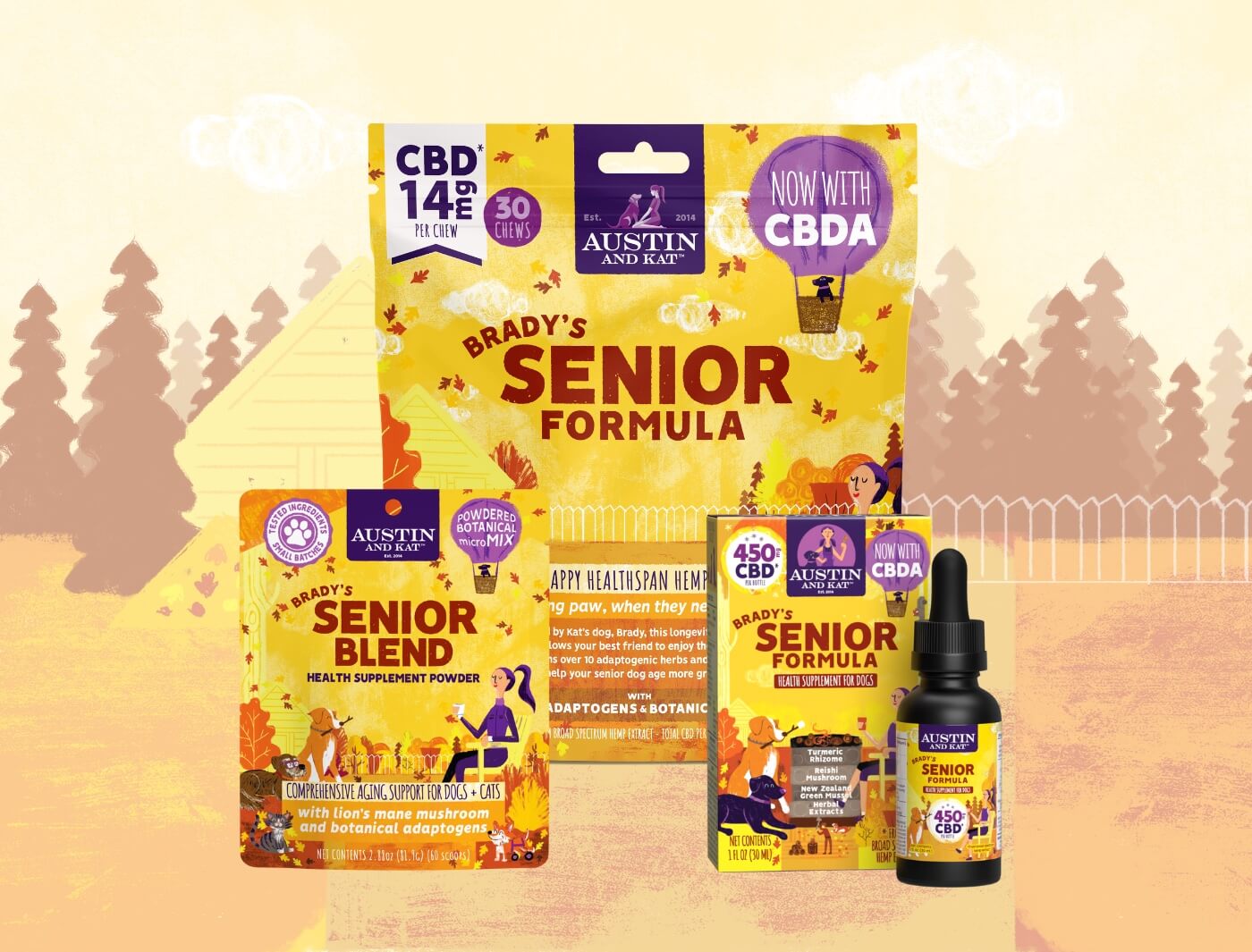
Chews vs. oil comes down to your dog and your life. The chews are easy, and most dogs love them, done. The oil gives you more flexibility with dosing, mixes easily into meals, and works well for dogs who are picky or have dental issues that make chewing uncomfortable. Both formats deliver the goods; pick what fits your routine.
The senior formula is designed as a comprehensive baseline, cognition, cellular health, and mobility support in one daily ritual. But there's only so much you can pack into a single formula. If your senior dog is dealing with significant mobility challenges for example, it makes sense to layer in dedicated joint support on top. Check out our Senior stacking guide if you’re interested in how to build on the senior formula for dogs who need extra help in specific areas. The senior formula gives you the foundation but you can customize from there based on what your dog needs.
The Long Game
Here's what I want you to take away from all of this: senior support isn't magic and it isn't instant. These compounds work through real biological mechanisms, supporting circulation, modulating inflammation, providing cellular building blocks, protecting against oxidative damage. That kind of support takes consistency and time to show results.
What you're doing is shifting the terrain your dog's body is working with. Not reversing aging, but giving every system better tools to do its job. Combined with good nutrition, appropriate exercise, regular vet care, and all the other pieces of the puzzle, that's how you support quality of life for the long haul.
Arya's grey face isn't going anywhere. Neither is her personality, her stubbornness, or her insistence on being wherever I am. That's the goal, really, not more years necessarily (although I’ll gladly take those too), but more LIFE in the years we've got.
- Lilly